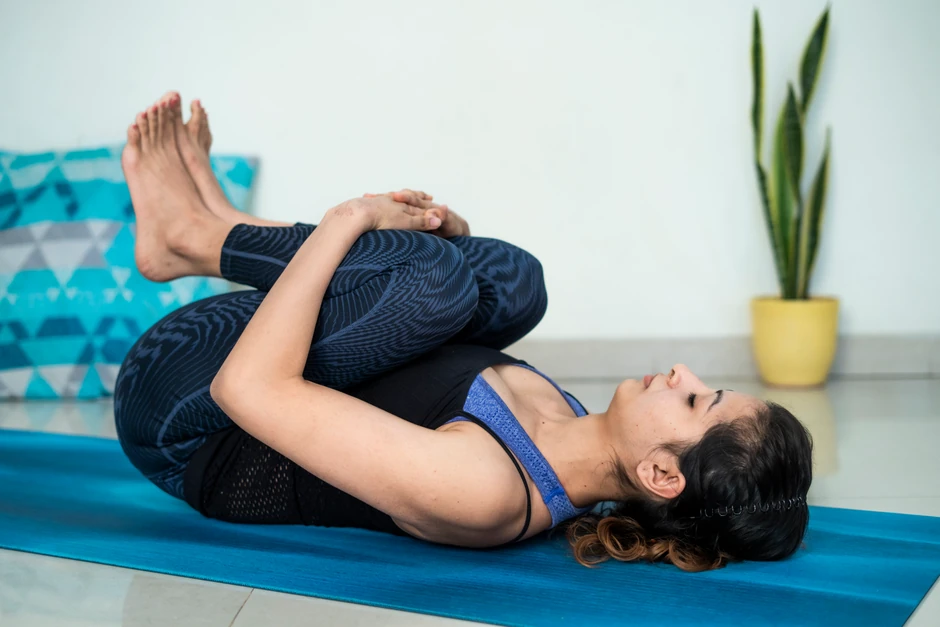
You crawl into your bed after a very tiring day, cover yourself up, and lay down flat on your back or your side but you don't feel rested. You feel dull, in pain in your lower back throbbing constantly. You keep changing positions, you flip on to your stomach, and put a pillow in between your knees, but your spinal muscles are still stiff and aching.
This stiffness you are feeling isn't just a physical issue; it is the main reason that can cause insomnia. When your lower back is locked in a condition where you are experiencing a long term muscular contraction, your sympathetic nervous system (which is responsible for fight or flight) always remains activated and keeps its guard up. When your brain notices that, it interprets this chronic muscular tension as a signal that you are still in an active or upright environment where you need to fight or act quickly for safety.
If you want to enter into a deep, restorative REM and slow-wave sleep effortlessly, your axial skeleton must be in a state of complete ?unweightedness?. By using a supported Child?s Pose (Salamba Balasana), you can make your lumbar vertebrae decompress in a passive way. When you have a good deep spinal erector stretch, it gives a signal of relaxation to your brain. Your nerves then begin to feel safe and enter in the rest mode.
1. The Hanging Spine vs. the Bolster-Supported Base
The Postural Error: Pressing your forehead to go straight down to the mattress in the classic Child?s Pose (Balasana), without using any props, which leaves a big gap between your chest and the bed?
The Mechanical Strain: When your chest is hovering without any kind of support, your neck, lower back and shoulder muscles experience partial contraction so that these muscles can hold your torso in space. Your parasympathetic nervous system will only become activated when your muscles become totally relaxed and surrendered; if your back muscles are constantly working in holding you up, your body always remains in high alert state.
The Structural Reset: Stack two pillows; they must be firm bed ones or a long yoga bolster lengthwise in between your knees. After that hug the pillow firmly with both of your arms and turn your head in one direction, this will make the weight of your torso, chest and head be absorbed into the prop.
2. The Compressed Sacrum vs. the Wide-Knee Lumbar Release
The Postural Error: When you keep your knees pressed very firmly into each other while you're folding in forward direction, which pinches your torso against the thighs and makes your breathing restricted.
The Mechanical Strain: This narrow knee folding causes the abdominal organs to compress, which prevents the diaphragm in its natural movement of dropping when you are inhaling. This forces the air to move upward into the chest, which triggers the fast paced, shallow breathing that keeps your heart rate high right before you want to sleep.
The Structural Reset: Keep the knees separated, they must be wide towards the outer edges of your bed or mat while your big toes touch each other. This wide knee setup gives enough space for your belly to gently and comfortably fall into it, which allows your sacrum to broaden in a horizontal manner and lets your lumbar be decompressed without the feeling of any compression in the stomach.
3. The Clenched Lower Back vs. the Diaphragmatic Back-Body Expansion
The Postural Error: Doing shallow chest level breathing while you are holding your lower back stiff and braced in the opposite direction of the stretch.
The Mechanical Strain: When you do the shallow breathing it will make the deep fascial layers of lower back (thoracolumbar fascia) restricted in movement, and that makes the tension trapped into L1- L5 vertebrae and keep the cortisol levels high.
The Structural Reset: As you rest your chest on the pillows, breathe deeply into your ribcage and lower back, imagine the breath is going to that region, and really feel it. Feel your back side of the body expand like a balloon every time you inhale and feel your hips sinking towards your heels with every exhalation.
The Bedtime Lumbar Release Checklist:
(Before you perform the child pose at night as preparation for sleep, make sure to go through this checklist and ensure the maximum spinal decompression and relaxation of the nervous system.
Full Un-weighting: Is your chest, torso and head at a relaxing position on the pillows without you experiencing any muscle strain?
Wide Foundation: Are your knees placed at the right amount of wideness so that your stomach can rest with total comfort between your thighs?
Back-Body Breathing: Can you feel the movement of your back, the gentle rise and fall with every time you inhale or exhale?
Soft Neck & Jaw: Is your neck turned gently towards one side which you're comfortable with while your jaw is soft and not tightly clenched?
Passive Sinking: Are your hips and sitting ones naturally sinking in the direction of your heels with any effort?
A Note on Structural Safety & Medical Caution:
Supported Child?s pose is a gentle and super effective pose which is made for deep, complete relaxation and comfort for the spine.
It must feel like an invitation that offers you gentle release from tension in your entire back body. If you experience sharp knee pain, severe ankle pinching, or intense numbness in your feet, step out of the pose immediately.
If you have a history of acute disc herniation, severe spinal stenosis, or recent knee surgeries, avoid deep end-range knee flexion without consulting your physical therapist or physician first. Always listen to your body and prioritize safety over deep stretching!