When yoga practitioners perform Tree Pose (Vrksasana) or Eagle Pose (Garudasana), they rely heavily on keeping their sight focused on one focal point that helps them in staying balanced which is usually a fixed spot on the floor or wall known as a drishti. This visual anchor is extremely helpful in stabilizing the body by giving the visual cortex direct feedback to calculate spatial orientation.
However, when you close your eyes during a single-leg balance, you feel an immediate wobble which isn't just because of any form of physical instability?it is your brain scrambling to re-map your body in space.
When you have a good understanding of how the neurological shift occurs and when visual input is removed, you learn how blind balance practice enhances somatic awareness, builds joint stability, and stimulates the vagus nerve to lower physiological stress.
The Three Pillars of Human Balance:
For maintenance of an upright posture in your body, your brain?s cerebellum processes real-time data from three distinct neurological systems:
1. The Visual System: Your eyes measuring distance, horizon lines, and environmental motion.
2. The Vestibular System: The fluid-filled canals in the inner ear detecting gravity, tilt, and head rotation.
3. The Somatosensory System (Proprioception): Millions of nerve receptors (proprioceptors) which are located in muscles, tendons, and joint capsules which are responsible for sending signals about weight distribution and joint angles.
Under normal conditions, the brain relies on visual cues for roughly 70% of its balancing calculations. When you keep your eyes closed, you instantly eliminate this primary input. To keep you from falling, your brain is forced to rapidly upregulate input from your vestibular system and foot-ankle proprioceptors. This neural shift transforms a basic physical pose into a high-level brain training exercise.
How Micro-Wobbles Stimulate the Vagus Nerve?
Whenever you take away this visual stabilization for the body balance, your ankle joints and intrinsic foot muscles undergo rapid, micro-adjustments which are known as postural sway. While these micro-wobbles might feel like instability, they are actually crucial for the conditioning of your nervous system.
Postural sway puts your balance in a challenging position without exposing you to real danger. This mild and controlled uncertainty produced by you often activates the sympathetic ("fight-or-flight") nervous system on a temporary basis.
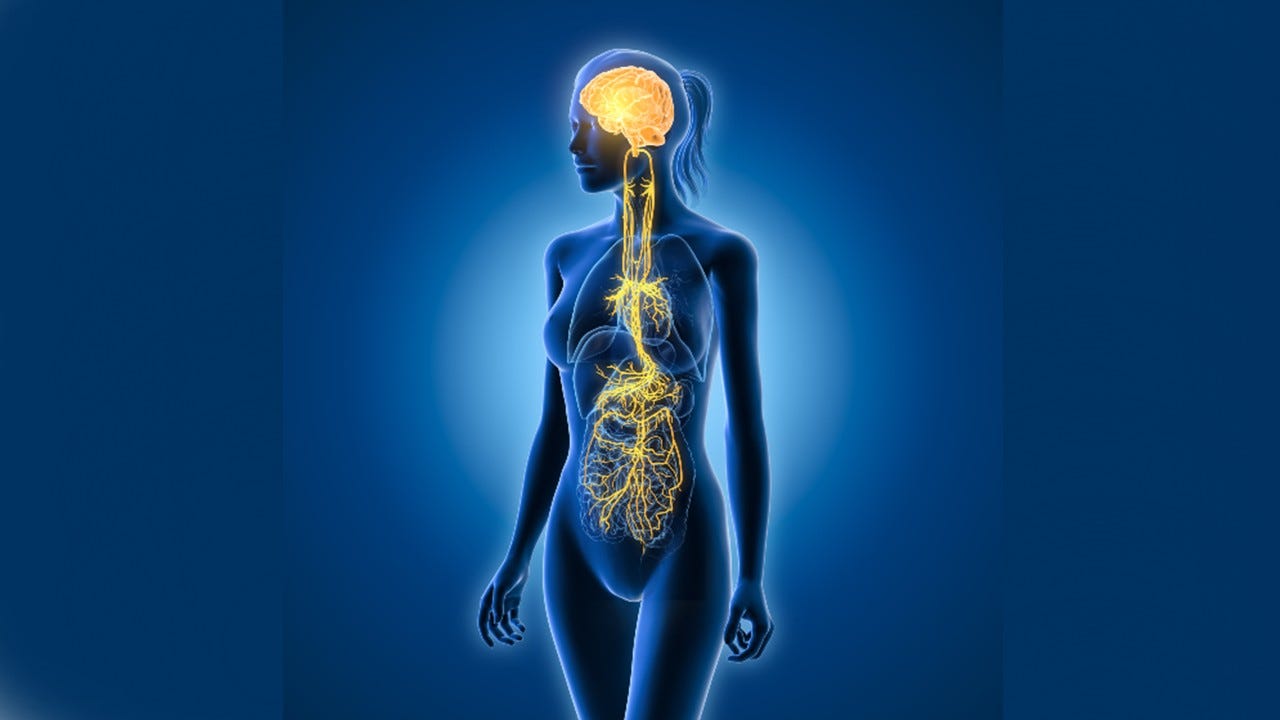
When you consciously do deep, slow breathing while navigating these wobbles, the vagus nerve?the primary driver of the parasympathetic nervous system? gives signals to the heart and brain that the body is safe. This cycle of mild physical threat followed by immediate, breath-induced calm will directly help you in improving the vagal tone.
The Higher vagal tone increases heart rate variability (HRV), reduces baseline cortisol, and helps your nervous system rebound faster from everyday stressful situations.
3 Steps to Safe Blind Balance Practice:
Practicing balance postures with your eyes closed should be approached progressively to prevent sudden falls and avoid joint strain.
1. Grounded Mountain Pose (Tadasana)
Method: Stand with feet hip-width apart on a firm floor. Close your eyes and focus on spreading your toes wide. Shift your body weight subtly toward your heels, toes, inner arches, and outer edges.
Neurological Focus: This is wonderful for training foot-and-ankle proprioceptors without the risk of falling.
2. Supported Single-Leg Soft Eyes
Method: Stand near a wall. Lift your right foot off the mat while keeping fingertips lightly touching the wall. Soften your gaze or close your eyes for 3 to 5 slow, diaphragmatic breaths.
Neurological Focus: It helps in engaging the vestibular system while you are fully supported and there is no compromise to physical safety.
3. Dynamic Eye-Tracking Transitions
Method: Stand in Tree Pose (Vrksasana). Instead of closing your eyes completely, keep them open while slowly moving your gaze from the floor, up the wall, and toward the ceiling, then back down.
Neurological Focus: This will give a safe form of challenge to the vestibular-ocular reflex, By moving the eyes across different visual planes while maintaining single-leg stability, you make your nervous system work in a safe way.
Medical Caution:
When you practice the balancing exercises while keeping your eyes closed, it will provide a great challenge to your nervous system. But you need to know that it will also increase the risk of falling down for you.
So make sure that you are keeping yourself safe all the time. Always stand next to a wall on a non-slippery floor or near a solid piece of furniture which you can grab immediately if you start to wobble.
Also, if you are one of those people who are suffering from health issues like severe vertigo, inner ear problems, or ongoing dizziness, we highly recommend that your first job is to consult a physician or physiotherapist before trying these exercises and only do them when you get the green signal, because you must keep your health as a first priority, all else secondary.